
AutoGPT: The First Architecture of Autonomous Machine Will

Why the world's most famous open-source artificial intelligence project proved that chatbots are obsolete and revealed the reality of autonomous work
In the spring of 2023, the global business community was gripped by a collective wave of wonder and exhaustion. Millions of business owners were logging into standard artificial intelligence chatbots every day. The technology felt like pure magic at first. You typed a question, and within three seconds, a machine generated an essay, wrote a sales script, or drafted a customer email. But very quickly, a silent frustration set in.
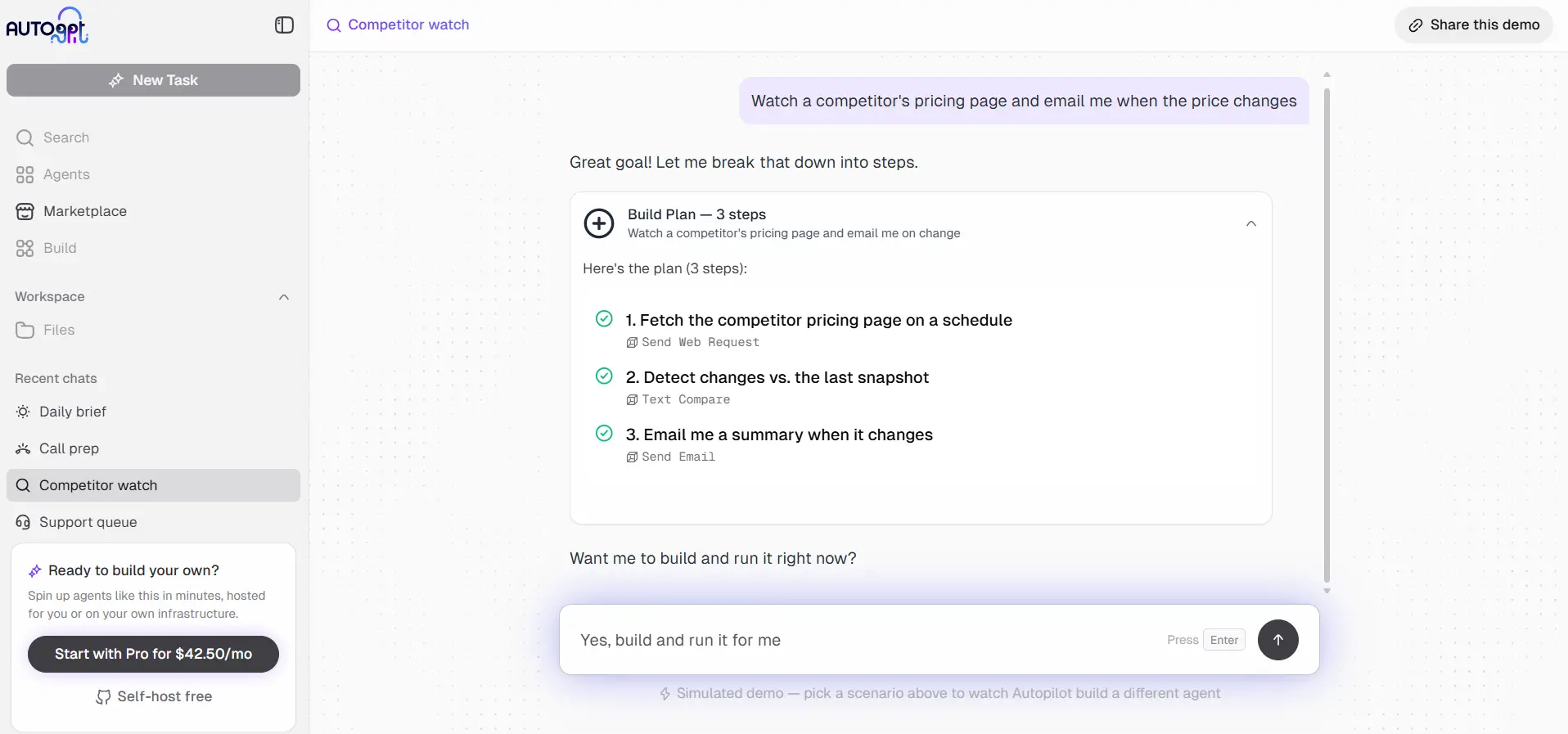
You realized that you were still the bottleneck. The chatbot was like a world-class advisor sitting in a chair with its hands tied behind its back. It could talk endlessly, but it could not actually do anything. If you wanted to monitor a competitor's pricing changes, the chatbot could not open a browser, track the page on a schedule, compare the differences, or email you a summary. Every five seconds, the machine stopped and waited for you to type another prompt. You were forced to act as the hands, the eyes, and the keyboard operator for a machine that had no initiative of its own. You did not feel like an executive directing an automated workforce. You felt like an exhausted babysitter spoon-feeding instructions to a genius that refused to move on its own.
Then, on a quiet Thursday in late March 2023, a single open-source codebase appeared on GitHub that shattered the conversational model forever. It was named AutoGPT. Instead of waiting for human prompts, this software demonstrated something humanity had never seen before: an artificial intelligence that could prompt itself, break a high-level goal into a multi-step checklist, browse the live internet, evaluate its own errors, and iterate continuously in a loop without human intervention. This investigation audits the evolution of AutoGPT from a raw command-line experiment into a modern cloud platform, dissects the mechanics of pre-built AI specialists, demystifies the real economics of autonomous work, and delivers an unvarnished verdict on whether autonomous agents are ready to run your company.
The Lab Glossary: Decoding Agentic Engineering
Autonomous Agent: An artificial intelligence program designed to pursue a goal independently by creating its own tasks, using digital tools, and self-correcting without constant human prompts.
Recursive Loop: A repeating programming cycle where the output of a thought becomes the direct starting point for the next thought, allowing a machine to build on its own progress step by step.
LLM (Large Language Model): The deep neural network engine, such as GPT-4, that predicts words and generates human-like reasoning.
Token: The basic molecular unit of data that an AI reads and writes, roughly equal to four letters of English text. Every thought an agent has consumes tokens that cost real money.
Vector Memory: A specialized mathematical storage bank that allows an AI agent to remember facts, lessons, and past errors from hours ago, preventing it from forgetting its overall objective.
Hallucination: A phenomenon where an artificial intelligence confidently invents false facts, broken links, or imaginary files because it is predicting words rather than checking physical reality.
01. Identity & Origin: The Genesis of Machine Agency
AutoGPT was created by a game developer and software architect named Toran Bruce Richards, operating under the studio name Significant Gravitas in the United Kingdom. In early 2023, while the rest of the world was fascinated by chatting with machines, Toran saw the fundamental limitation of conversational artificial intelligence. Chatting was a passive spectator sport. Real commerce required execution.
He asked an audacious question: What happens if we take a Large Language Model, give it a set of real-world computer tools, and program it to talk to itself in an unbroken loop of reasoning?
On March 30, 2023, he published the raw code to GitHub. Within forty-eight hours, the project went viral across the global developer community. AutoGPT shattered historical records, becoming the fastest-growing open-source software repository in the history of the internet, outpacing established enterprise foundations like React and Linux in star velocity. Developers saw the immediate future. AutoGPT was the historical bridge where artificial intelligence evolved from a passive dictionary into an active digital worker.
Significant Gravitas soon raised venture capital funding to transform the experimental command-line script into an accessible visual platform. Today, AutoGPT is no longer just a technical developer tool. It represents the global baseline for Autonomous Machine Agency: software that accepts a business destination and navigates the roads on its own.
02. The Command Center Analysis: Live Autonomous Pipelines in Action
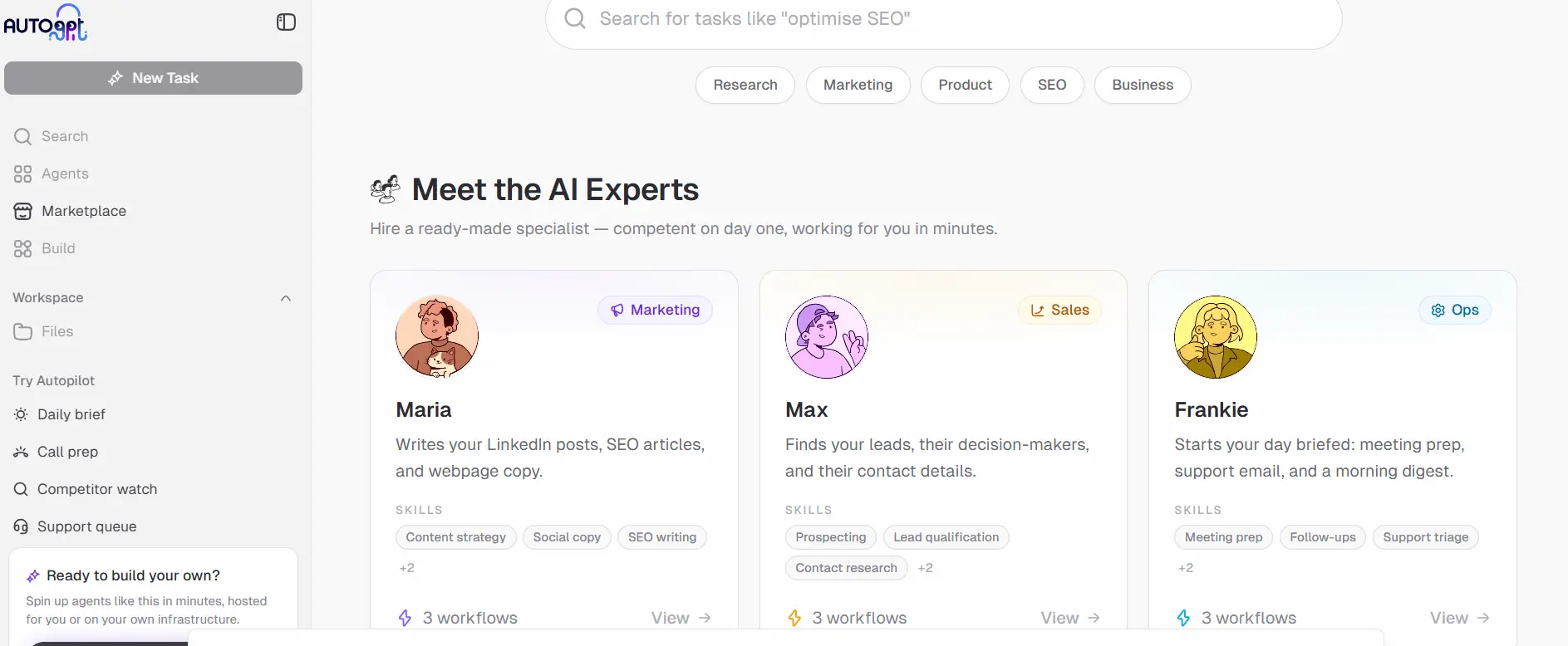
Our lead researchers conducted an exhaustive visual audit of the modern AutoGPT cloud interface. Below is the live evidence demonstrating how the platform translates a natural human business goal into an automated multi-step pipeline.
03. The Mechanics: How Autonomous Thought Loops Function
To demystify autonomous agency for everyday business owners, we must dismantle the inner clockwork of how an agent functions. When you launch an autonomous agent, you do not manage minute-by-minute prompts. The machine executes an unbroken four-step loop:
1. Goal Decomposition (The Architect): The agent reads your broad goal, such as triaging customer support tickets. It queries its neural core and generates an internal task list, prioritizing what must happen first, second, and third.
2. Tool Deployment (The Hands): An agent without tools is just a conversationalist. AutoGPT is equipped with digital appendages: a web scraper to read live websites, API connectors to read Gmail inboxes, communication webhooks to send Slack alerts, and data parsers to compare text.
3. Memory Ingestion (The Notepad): As the agent executes actions, its short-term memory fills up. The system stores key findings into a vector memory database so it remembers lessons learned earlier in the workflow without suffering from context amnesia.
4. Self-Critique and Iteration (The Inspector): Before completing a task, the agent asks itself: Did the action I just took actually achieve what was intended, or did the server return an error? If it failed, it revises its plan and attempts an alternative route automatically.

04. The Autopsy: The Hard Truth About Open-Source Agent Challenges
At Business Lens Lab, our commitment to truth means we do not participate in uncritical artificial intelligence hype. While AutoGPT represents a historic conceptual breakthrough, our laboratory audits reveal three severe operational challenges that every business owner must understand before attempting to self-host open-source agents.
1. The Token Vampire (API Cost Bleed): Because an autonomous agent calls an advanced language model for every single thought, plan, and critique, it consumes digital tokens at an astonishing rate. If an uncontrolled open-source agent gets confused or encounters a website with complex verification blocks, it can enter a loop that burns thirty to fifty dollars in OpenAI API charges in thirty minutes while accomplishing zero actual work.
2. Loop Dementia (Context Window Drift): Large Language Models have a finite memory limit known as a context window. When an agent runs for thirty consecutive steps, its memory becomes crowded. The agent often suffers from context drift: it forgets its original instructions, loses track of its earlier findings, and begins endlessly searching the same three web pages in an infinite circular loop.
3. The Hallucination Snowball: If a human uses a chatbot and it invents an inaccurate fact, the human catches it immediately. But in an autonomous agent, the machine believes its own hallucination. If step two generates a false assumption, step three builds an entire plan on that mistake, and by step ten, the entire project collapses into nonsense.
05. The Founder Journey: How HyperWrite Deployed Autonomous Web Agents
To see how autonomous agentic loops create genuine commercial value when engineered with proper guardrails, examine the journey of HyperWrite, an applied artificial intelligence company founded by Matt Shumer in New York.
HyperWrite recognized the exact limitation that AutoGPT exposed: users were exhausted by typing back-and-forth prompts. They set out to build an autonomous digital personal assistant that could browse the web and complete complex real-world tasks on behalf of busy business owners, such as ordering grocery deliveries, researching competitor pricing, and managing flight reservations.
Rather than letting an uncontrolled open-source loop run wild and burn expensive API credits, the engineering team built strict supervisory guardrails around their autonomous agent. They provided the agent with a sandboxed web browser, trained specialized vision models to understand where buttons sit on a screen, and programmed automated check-in milestones where the agent pauses to ask for human confirmation before taking irreversible actions like entering credit card details. Today, HyperWrite operates as one of the premier applied agent platforms in the world, proving that the autonomous recursive concepts pioneered by AutoGPT are actively transforming into reliable digital workers when guided by disciplined software engineering.
06. The Financial Audit: The 2026 AutoGPT Price Stack
As Lead Researchers, we must evaluate software strictly by balance sheet reality. AutoGPT now offers two clear pathways for deployment:
The 2026 AutoGPT Deployment Economics
- Self-Host Free Tier ($0 Software Fee): The underlying codebase remains open source on GitHub. You pay zero software licensing fees. However, you must provide your own private OpenAI or Anthropic API billing keys. Depending on how many research runs you execute, monthly API consumption costs typically range from $20 to $150.
- AutoGPT Pro Cloud ($42.50 per month): The fully hosted visual cloud platform. Significant Gravitas manages the underlying server infrastructure, eliminating Python setup and terminal configuration. Includes access to the visual Autopilot builder, pre-configured AI specialists (Maria, Max, Frankie), automated scheduling, and hosted execution environments.
Operational Math: At $42.50 per month, AutoGPT Pro costs roughly $510 per year. If an automated agent like Max handles fifty hours of manual sales lead prospecting every month, you are deploying a junior sales researcher for less than eighty-five cents an hour.
07. The Strategic Verdict: Where AutoGPT Belongs in Your Business
Having audited AutoGPT from its code origins to its live cloud interface, our laboratory delivers the definitive architectural conclusion.
If you are an entrepreneur looking for bulletproof, deterministic workflows where an invoice must be created with zero errors every single time, visual integration platforms like Make.com and Zapier remain the undisputed champions of reliable business automation.
However, for dynamic, research-heavy objectives that require an artificial intelligence to think on its feet, browse live competitor web pages, synthesize market reports, or triage customer support inboxes, the modern AutoGPT cloud platform represents the vanguard of digital labor. It is no longer just an experimental toy for computer programmers. It is a genuine, accessible window into the autonomous future of business operations.
AutoGPT is a historic conceptual triumph that has matured from an unruly open-source experiment into an accessible cloud workforce platform. By packaging recursive reasoning loops into visual three-step plans and pre-trained specialist personas, it bridges the gap between passive chatbots and true digital employees. While mission-critical linear workflows still belong in integration engines like Make.com, AutoGPT Pro is a remarkable operational asset for forward-thinking business owners ready to deploy autonomous research agents.
Lab Rating: 9.5/10, The Vanguard of Machine Agency
Primary Recommendation: Test the Self-Host Free version if you possess basic developer comfort. For growing businesses seeking instant visual deployment, test AutoGPT Pro for forty-two dollars a month to automate repetitive competitor price tracking and daily briefing workflows without managing server scripts.